Chasing unpaid invoices: a practical guide for UK businesses
Chasing unpaid invoices: a practical guide for UK businesses

Chasing unpaid invoices is the structured process of following up on overdue payments through a timed, escalating sequence of communications. In the UK, this process is formally supported by the Late Payment of Commercial Debts (Interest) Act 1998, which gives businesses the legal right to charge statutory interest on overdue B2B invoices. Cash flow is not vanity. It is survival. For small businesses and freelancers, a single unpaid invoice can delay payroll, stall suppliers, and undermine months of solid work. The good news is that a calm, consistent, and well-documented approach recovers most debts without damaging the client relationship.
What checks should you make before chasing an unpaid invoice?
Preparation prevents wasted effort and protects client relationships. Before you send any reminder, verify that the invoice itself is correct and that the due date has genuinely passed.
Run through these checks first:
- Recipient details. Confirm the invoice is addressed to the right contact and company, with the correct legal name and address.
- Invoice amount and description. Errors in figures or service descriptions give clients a legitimate reason to delay.
- Purchase order reference. Many larger organisations will not process an invoice without a valid PO number. Missing this is one of the most common causes of delay.
- Delivery confirmation. Check that the invoice was actually received. Email delivery receipts, portal upload confirmations, or a brief acknowledgement from the client all count as evidence.
- Due date accuracy. Confirm the payment terms stated on the invoice match those agreed in your contract. Chasing before the due date damages trust.
- AP portal status. If your client uses an accounts payable portal, log in and check the invoice status. 70% of unpaid B2B invoices are stuck due to portal rejections or processing delays, not refusal to pay. Common issues include PO mismatches, missing attachments, and portal registration problems.
Pro Tip: Before any outreach, check whether your contract specifies a particular invoicing format or submission route. Sending a PDF by email when the client requires portal submission means the invoice may never have entered their system.
Credit control experts recommend establishing clear payment terms before work begins. Proactive communication at the contract stage reduces late payments and strengthens your position if you later need to escalate.

What is the recommended escalation timeline for chasing late payments?
A structured, timed sequence is the most effective approach to collecting late payments. The goal is to escalate gradually, maintaining a professional tone at every stage.
-
Day 1 after the due date. Send a short, factual reminder email. Assume good faith. The client may simply have overlooked the invoice. Keep the message brief: state the invoice number, amount, and due date, and ask for confirmation of payment.
-
Days 5–7 after the due date. Send a firmer follow-up. Acknowledge that you have not yet received payment and ask for a specific payment date. Avoid apologies. You should never apologise for requesting payment for delivered work. A neutral, factual tone reduces emotional resistance and preserves trust.
-
Around day 14. Make a phone call. Speaking directly often uncovers barriers that email cannot. The client may have a cash flow issue, a query about the invoice, or a processing problem you can resolve quickly. A call also signals that you are serious without being aggressive.
-
Days 30–60. Send a formal-written notice. This letter should state the total amount owed, reference your payment terms, and mention your right to add statutory interest and fixed compensation under the Late Payment of Commercial Debts (Interest) Act 1998. This is the point where the tone shifts from reminder to formal demand.
The table below summarises the recommended sequence:
| Stage | Timing | Action | Tone |
|---|---|---|---|
| Friendly reminder | Day 1 after due date | Short email, state invoice details | Polite, factual |
| Firm follow-up | Days 5–7 | Request specific payment date | Direct, professional |
| Phone call | Around day 14 | Discuss barriers, confirm timeline | Calm, solution-focused |
| Formal notice | Days 30–60 | Written demand, mention legal rights | Firm, formal |
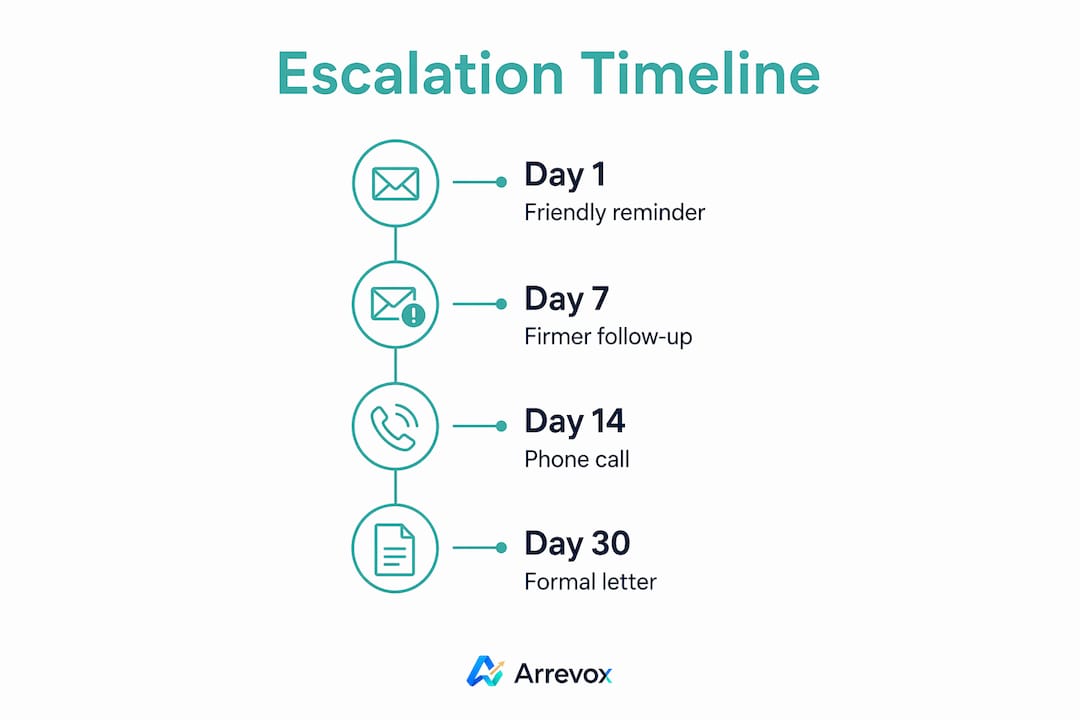
The recommended escalation timeline of reminder, firmer follow-up, phone call, and formal letter improves payment rates while preserving client relationships. Consistency is the deciding factor.
Pro Tip: Keep a log of every contact attempt, including the date, method, and any response. This record becomes critical evidence if you later need to pursue the debt through formal legal channels.
How can UK businesses use statutory interest and compensation when chasing invoices?
UK law gives businesses a powerful set of tools for recovering overdue payments. The Late Payment of Commercial Debts (Interest) Act 1998 entitles you to charge statutory interest on overdue B2B invoices automatically, without needing a clause in your contract.
The key entitlements are:
- Statutory interest rate. UK businesses can charge 8% plus the Bank of England base rate on overdue B2B invoices. As of july 2026, this totals 11.75% per year, accruing daily until payment is made.
- Fixed compensation fees. You can also claim a fixed debt recovery fee based on the invoice value: £40 for invoices under £1,000, £70 for invoices between £1,000 and £9,999, and £100 for invoices of £10,000 or more.
- Letter Before Action (LBA). A Letter Before Action is a formal pre-court step that sets out all amounts owed, including interest and compensation, and gives the debtor a final deadline to pay. Courts expect an LBA before any litigation begins, and sending one often triggers payment without further action.
Applying statutory interest and fixed compensation under UK law is most effective after earlier, softer steps have failed. Mentioning legal rights too early can feel aggressive and may damage a relationship that could otherwise be resolved with a simple reminder. Use these tools as escalation leverage, not as an opening move.
The right moment to mention statutory interest is typically in your formal notice at the 30–60 day mark. At that stage, the client has had multiple opportunities to pay, and the mention of accruing interest and compensation fees creates a clear financial incentive to settle promptly. Balance legal pressure with a professional tone. The aim is payment, not confrontation.
What practical tips help when dealing with unpaid bills?
Collecting late payments consistently requires good habits as much as good tactics. Several common mistakes prolong delays and damage relationships that are otherwise worth keeping.
- Do not over-apologise. Requesting payment for completed work is a normal part of business. Excessive apologies signal uncertainty and can encourage further delays.
- Start early. A friendly pre-due nudge, sent a day or two before the invoice falls due, reduces the number of invoices that become overdue in the first place. Proactive communication at the contract stage and before the due date significantly reduces late payments.
- Distinguish administrative delays from refusal. Many late payments result from technical holdups in AP portals, not deliberate non-payment. Checking portal status before escalating saves time and avoids unnecessary friction.
- Handle non-communicative clients carefully. If a client stops responding, escalate the communication channel. Move from email to phone, then to formal written correspondence. Silence is not a reason to pause chasing.
- Pause services only when your contract allows it. Withholding future work or deliverables can be an effective lever, but only if your terms explicitly permit it. Acting outside your contract creates legal risk.
- Maintain detailed records. Prolonged chasing without clear documentation weakens your position. A timeline of polite but firm reminders supports any formal claim you later need to make.
- Use a tracking system. Manual spreadsheets are error-prone. A dedicated invoice tracking tool gives you real-time visibility of payment status and prevents invoices from slipping through unnoticed.
Pro Tip: Set calendar reminders for each stage of your escalation sequence the moment an invoice becomes overdue. Waiting until you remember to chase costs you time and money.
Consistent, calm communication builds professional respect. Neither ignoring late payment nor aggressive chasing helps. A predictable schedule signals that you take your business seriously.
Key takeaways
Chasing unpaid invoices effectively requires a structured, timed escalation process, clear legal knowledge, and consistent professional communication at every stage.
| Point | Details |
|---|---|
| Verify before chasing | Check invoice accuracy, delivery, and AP portal status before any outreach. |
| Follow a timed sequence | Escalate from a friendly reminder on day 1 to a formal notice at days 30–60. |
| Use UK legal rights | Statutory interest of 11.75% per year and fixed compensation fees apply to overdue B2B invoices. |
| Never apologise for payment requests | A neutral, factual tone reduces resistance and preserves client trust. |
| Document everything | Detailed records of all contacts and promises support any formal legal claim. |
Chasing invoices is a normal business process, not a confrontation
I have spoken with hundreds of small business owners and freelancers over the years, and the single biggest mistake I see is treating invoice chasing as an awkward, uncomfortable task. People delay sending reminders because they worry about seeming pushy. That hesitation costs them money.
The clients who pay late are rarely doing so out of malice. Most of the time, it is an oversight, a portal issue, or a cash flow squeeze on their end. When you approach the conversation with calm professionalism, you make it easy for them to resolve the situation. When you approach it with frustration or apology, you make it harder.
What I have found consistently is that the businesses with the best payment records are not the ones who chase hardest. They are the ones who chase consistently. They send reminders on a predictable schedule, they follow up without fail, and they document every exchange. That predictability earns respect. Clients learn quickly that invoices from these businesses do not get ignored.
The other thing I would stress is prevention. Clear payment terms agreed before work begins, a pre-due reminder, and a quick check that the invoice has been received correctly will eliminate a significant proportion of late payments before they ever become a problem. Chasing is necessary, but a well-structured invoicing process means you need to do far less of it.
— Sean
How Arrevox supports UK businesses with invoice follow-up
Managing a structured chasing process manually takes time that most small businesses and freelancers simply do not have. Arrevox is built specifically for UK businesses facing this challenge.
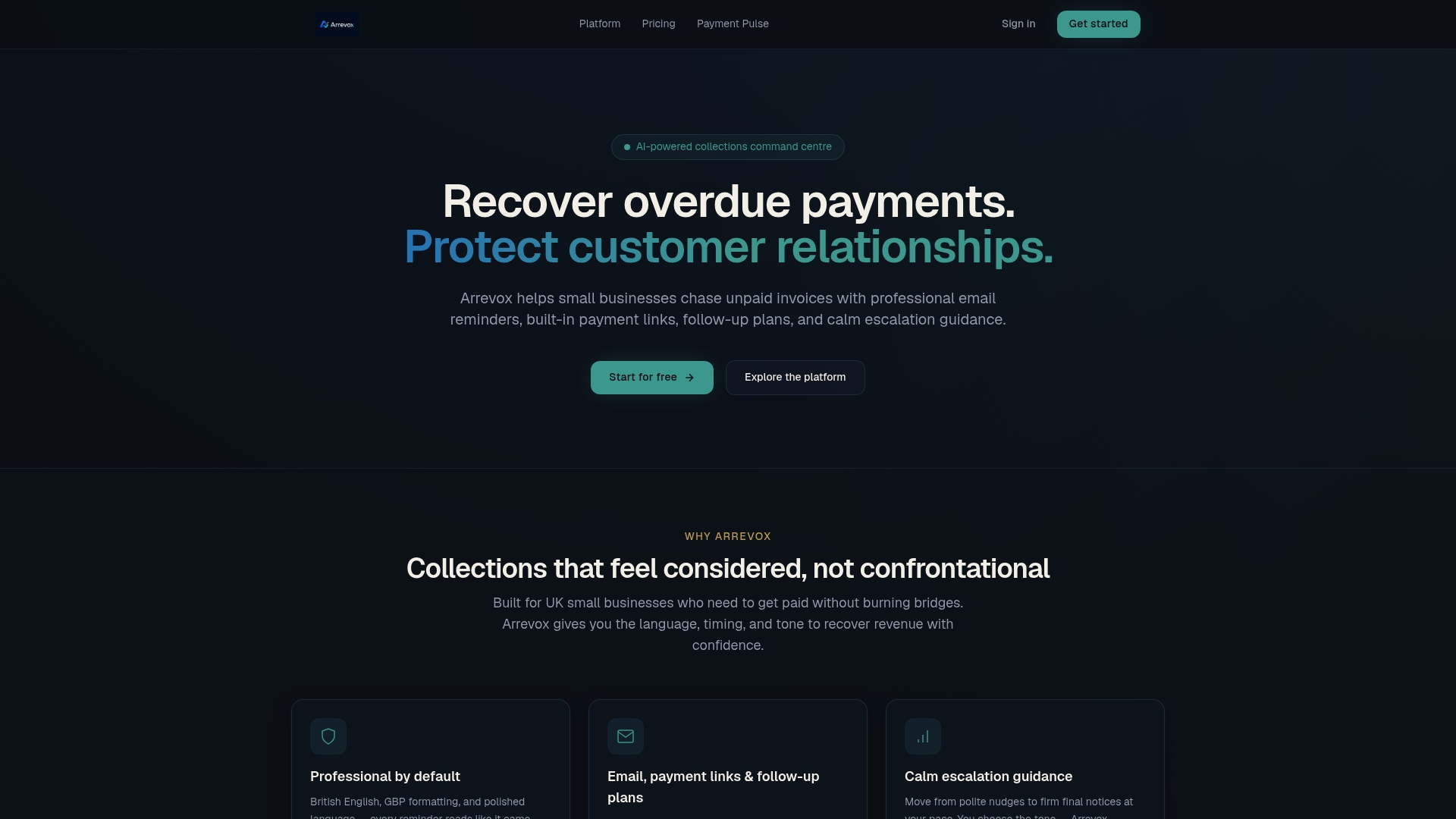
Arrevox sends professional payment reminders for clients automatically, with integrated payment links that make it easy for clients to settle immediately. You choose the tone, from a polite nudge to a firm final notice, so every communication reflects your business professionally. The platform also provides cash flow analysis and data-driven guidance, giving you a clear picture of how overdue invoices are affecting your finances. Arrevox reduces the time you spend chasing and gives you the visibility to act before small delays become serious problems.
FAQ
What does chasing an unpaid invoice mean?
Chasing an unpaid invoice is the process of following up with a client to request payment for an overdue bill. It typically involves a timed sequence of emails, calls, and formal notices, escalating in firmness until payment is received.
When can I charge statutory interest on a late invoice in the UK?
UK businesses can charge statutory interest on overdue B2B invoices under the Late Payment of Commercial Debts (Interest) Act 1998. As of july 2026, the rate is 11.75% per year, comprising 8% plus the Bank of England base rate.
What is a Letter Before Action?
A Letter Before Action is a formal written notice sent before court proceedings, setting out all amounts owed, including interest and compensation, with a final payment deadline. Courts expect this step before any litigation, and it frequently triggers payment without further escalation.
How do I chase an invoice without damaging the client relationship?
Use a calm, factual tone at every stage and avoid apologising for requesting payment. A consistent, predictable chasing schedule signals professionalism and earns respect without creating confrontation.
Why do most invoices go unpaid?
Most unpaid B2B invoices are delayed by administrative or portal issues rather than deliberate non-payment. Checking AP portal status and verifying invoice details before chasing resolves many cases without any conflict.